Along the journey, I encountered not only landscapes, but also people, cultural differences, and moments that changed how I understand the world.
A Different Way of Moving
I am a Chinese student currently studying in Rome, and this year I moved to Paris for my Erasmus exchange.
Like many students, I travel with a limited budget. Taking the bus often costs just over ten euros. It takes longer, but I am not in a rush. I do not have urgent work or strict schedules to follow.
So I choose to travel slowly. It is not only about saving money, but also about choosing a more sustainable way of travelling — using buses and trains instead of flying whenever possible.
At first, it was simply a practical decision. Over time, it became something else. Slowing down changes what you notice.
A Night That Stayed
On my way to Paris, I travelled from Rome to Milan by bus. A friend told me that for just a few extra euros, it was possible to get a more comfortable seat where I could lie down and rest. I chose that option, expecting nothing unusual.
But that night was not uneventful. A girl reported that a man had behaved inappropriately towards her while she was sleeping. The bus stopped. The driver was informed. The police were called. We were supposed to arrive around midnight. In reality, we didn’t arrive until 5 a.m.
I remember the exhaustion, but that is not what stayed. What stayed was this: No one told her to stay quiet, no one blamed her for delaying the journey, and no one treated her as an inconvenience.
The situation was taken seriously, and for me, that was unfamiliar.
A Difference I Could Not Ignore
Later, I talked about it with my female friends in China; we did not need time to think about it. We already knew what would most likely happen in a similar situation back home. The driver would probably ask them to get off the bus and deal with it themselves, so that the journey would not be delayed. The priority would be to keep things moving, not to resolve the situation. Even if the police were involved, the goal would likely be to calm everything down as quickly as possible. The girl might be told to let it go, especially if there was no visible physical harm.
We all understood this instinctively. That is why this experience affected me so deeply, because what I witnessed that night was not just an incident; it was a completely different attitude towards it.
Between Beauty and Discomfort
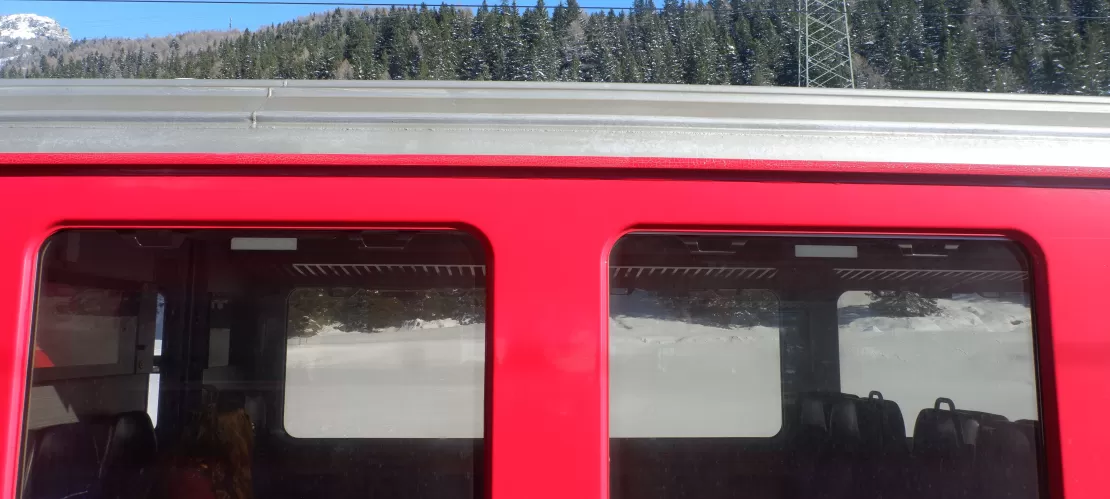
After Milan, I continued my journey by train towards Switzerland, along the Bernina route from Tirano to St. Moritz. Snow-covered mountains, frozen lakes, endless forests. The red train moved slowly through it all; it should have been one of the most beautiful parts of the journey.
But it didn’t feel that way. At some point, a woman occupied my seat. She moved my belongings aside and insisted on sitting there. I told her that the seat was mine, but she argued back, firmly and aggressively.
At the same time, she insisted on keeping the window open. Cold air filled the carriage. Everyone was clearly uncomfortable, yet no one said anything. No one stopped her, no one confronted her. People chose silence, and I also chose the same. I stepped back and tolerated it. But even now, I still remember her expression, and what stayed with me was the contrast.
The most beautiful landscape I had seen — and one of the most uncomfortable moments of the journey. It made something clear: a place can be beautiful, but the experience of it depends on people.
What Travel Reveals
By the end of this journey, I had begun to understand something differently. Travel not only shows you places. It reveals people — and often their most instinctive reactions. When everything around you is unfamiliar, you do not have time to overthink. You react. And those reactions are often the most honest version of yourself.
There is a common idea discussed on Chinese online forums: If you want to know whether you are truly compatible with someone, travel together. Because travel exposes everything. How people respond to pressure, how they deal with uncertainty, and how they behave when things go wrong.
After the journey, relationships rarely stay the same. They either become stronger — or fall apart. I experienced this myself.
When we arrived late and missed our train, we had to change our route and take a longer one. It was inconvenient, but it gave us something unexpected — more time, more scenery, more experience. Travel compresses everything and in that compression, people become clearer.
Why I Still Choose the Slower Way
Before, I thought green travel was simply about sustainability. Now I see it differently. Travelling slowly not only reduces environmental impact.
It also forces you to experience everything in between — the people, the tension, and the unexpected. This journey gave me beautiful landscapes.
But more importantly, it showed me something else: What people prioritise, what they ignore and how they respond. And sometimes, it shows you yourself. That is why I still choose the slower way. Not only because it allows me to see more, but also because it is a more responsible way of moving through the world.