The SPEAK OUT project is an Erasmus+ initiative led by the Erasmus Student Network (ESN) in partnership with European Alternatives and ESN member organisations across Europe. Its main goal is to promote intercultural and inclusive societies by targeting young people, youth workers, policymakers, and citizens. The project also highlights advantages of peer-to-peer learning between those who have and have not benefited from EU mobility opportunities and tries to engage young people in local communities while expected effects is higher democratic participation, addressing misinformation and stereotypes. Through a combination of trainings, webinars, dialogues, and large-scale events, the project empowers youth to overcome most common challenges such as low political participation and limited awareness of EU opportunities.
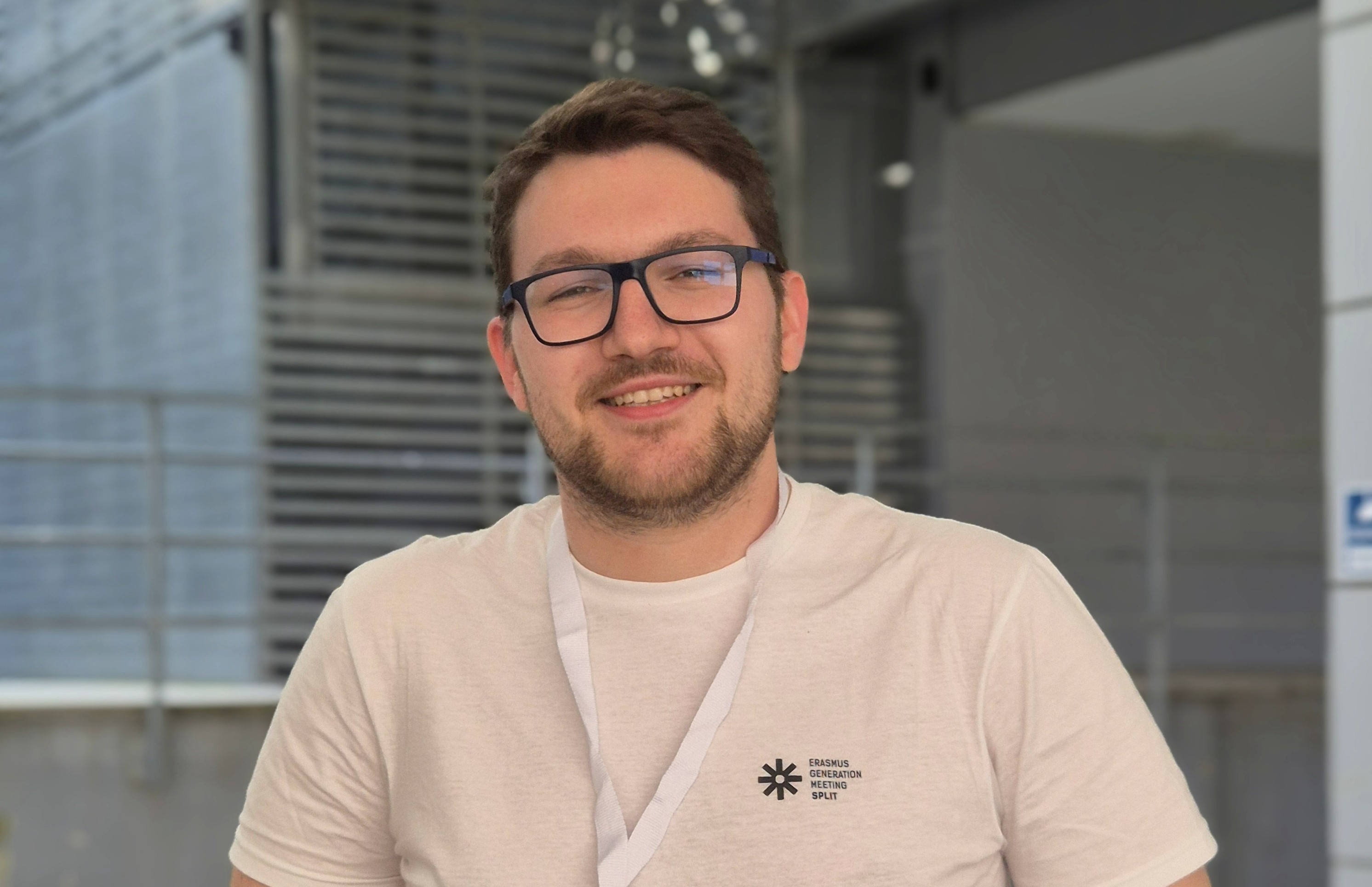
As ESN Bulgaria was one of the project’s partners, we spoke with Ivan Markov, a Communication and Multimedia Design graduate, one of the key figures who strongly worked on its implementation on national level. In this interview, Ivan reflects on the aims and impact of SPEAK OUT in Bulgaria, the importance of connecting young people with institutions and the reality of youth participation in the country. He also shares insights from local and national activities including collaborations with youth organisations and policy discussions, as well as his personal motivation for getting involved in creating more space for young people’s voices to be heard in decision-making processes.
What is the main goal of the Speak Out project in Bulgaria?
The Speak Out project in Bulgaria focuses on bridging the gap between institutions and local youth and local volunteers. Locally, we discuss with local institutions in one of the smaller cities in Bulgaria. Then for the national phase, we actually participated and collaborated with the National Youth Forum to offer proposals for policies to the national policy makers, all being done by the local youth.
Why personally did you engage in it?
Me and my colleagues engaged in it because we find the value in actually offering the space to all the young people. We believe in the young people in Bulgaria, as much as they can, as much as they are allowed to, as much as they possibly can, that they do want to engage and be active citizens. Sometimes you just have to bridge the gap, you have to invite them, put them in the same room with policy makers and then you can see how the magic happens.
Do you think that youth in Bulgaria feel free to speak out?
I think they do feel free to speak out, but I also think they don't speak out enough so I feel like it's a bit of a limitation in the mindset. Yes, they do speak, but only for very surface-level policies or very surface-level news headlines. When you dive deeper, when you talk with more people and when you talk with people from different cities, then you can see how much deeper it is and how more of a productive a discussion you can have.
What are the greatest issues that you're trying to combat?
During our national phase, which we did with the National Youth Forum, we talked with young people from 10 cities in Bulgaria or more, and one of the main issues was clarity of information for national projects, because you apply and you don't know why you're not accepted or why you're accepted. Updatedness, so the information to be curated in a way that's accessible to them. Also, sometimes the dialogues, all these phases that we do when we talk with institutions, we felt that sometimes young people don't feel represented or even respected. Things are suggested, but they're never implemented, and also the political situation with so many parliaments being changed every few months adds to more uncertainty. And these are the main challenges that we found in young people.
Can you share a success moment or some great story that was a product of Speak Out in Bulgaria?
I can say two things. For our local phase, which we did in Stara Zagora, we had a very productive discussion with the local youth centre and local youth organisation. A lot of people got inspired to start their own youth organisation, NGOs or projects to actively engage in youth centres, not only in this city, but in the country. As for our national phase, I would say the successful product was the self-awareness and the confidence in our participants and young people, because now they talk with institutions, they make policies and we feel that now they are more confident to do it all over again.
What are the next steps?
The next steps are to be in contact with our national partners, the National Youth Forum and other youth organisations in the country, to see how we can improve these processes. At the time of this interview, we are having elections in Bulgaria, and are organising voting activities for young people. So all these processes, all this youth policy-making and youth participation that are happening right now, we will keep discussing politics in our country.
If you could improve something about the project, what would it be?
That's a very good question. For sure, we can engage more with the local municipalities because they offer tremendous support for our events, but since we do them on the weekend, we found issues with them coming to actually talk with us. So, if possible, doing it during a weekday or finding them in a more available slot, would be amazing. Additionally, we would also love to see more outsiders, not only ESN or youth organisation workers, because most of our participants, if not all, are already in the sector, they already do stuff. It would be great to bring people that do not do stuff, a silent majority to offer us a perspective, of the people that don't engage in politics and to see how they will speak out, how they will learn to be more advocate for themselves.