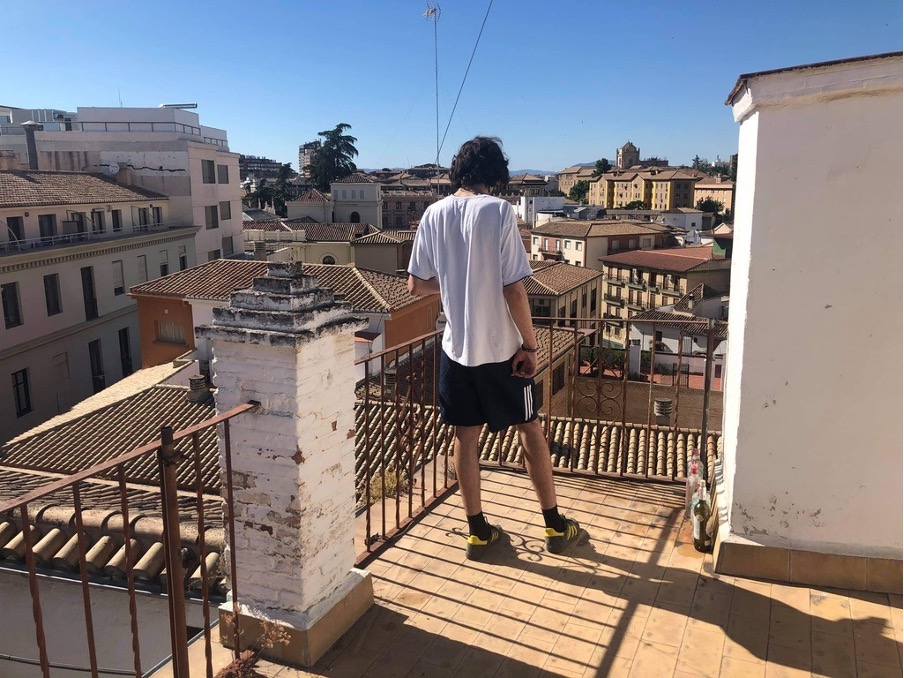
I wonder what it must have felt like to have been the first cohort of Erasmus+ students to have plunged boldly and vulnerably into mysterious and uncharted waters, without an infinite access of information at their disposal, or the incessant, overhanging presence of smartphones, the internet, and more broadly, modern technologies. Would the experience have been more adventurous and enriching? Could it have led to more meaningful connections between Erasmus students and their respective host cities? Or did it, in fact, give way to encounters being limited and fleeting in nature?
The pre-internet age of the ‘fearless traveller’ is often glamourised in today’s popular culture; projected as a world free of distraction and cheap technological comfort, and instead one of real thrills, grounded in a naked sense of reality. At its core, it is one which elicits a longing for purity, simplicity and a nostalgic sense of blissful isolation, stripped of all technological artifice. Students from my generation, who were the first to grow up alongside these pervasive technologies, seem to be consistently bedazzled by this ancient, alluring world of innocence and escape, but was it really a simpler, more idyllic time that Erasmus+ students had the fortune of inhabiting all those years ago?
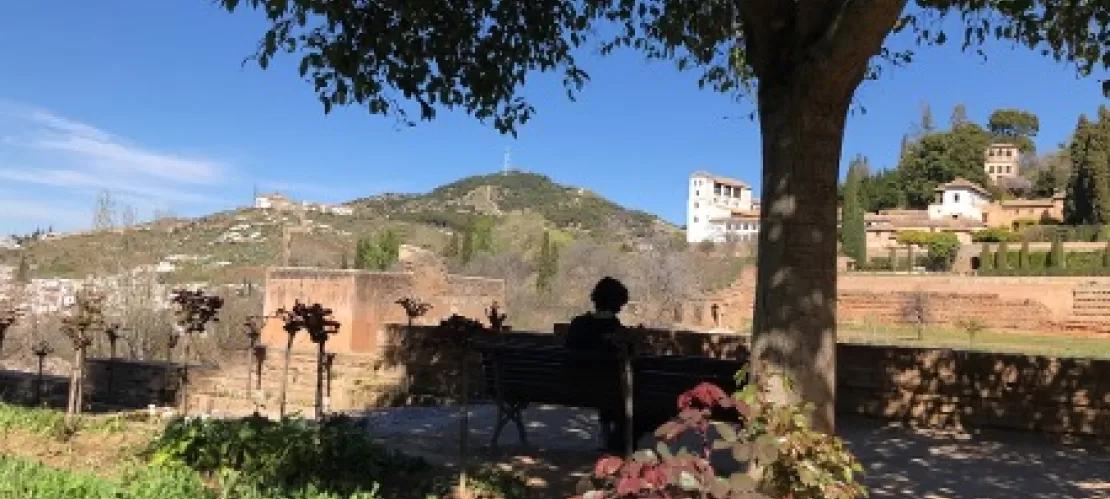
Fundamentally, many would argue that Erasmus+ students throughout all generations share the same universal challenges and joys (more or less) regardless of how much technology features in their day-to-day lives. But to dismiss these exponentially growing technologies as mere peripheral components in how the current digital generation experiences Erasmus+ is unthinkable. Bizarrely, when I reflect on my own experience as an Erasmus+ student from September 2019 to March 2020, I can’t imagine my time in Granada existing without social media or smartphones hovering in the background (or foreground).
From the beginning until the very end, Instagram, Facebook and WhatsApp played an important role in facilitating diverse and widespread connections between myself and other students within ESN and the wider international student community. I was able to join sports teams, social clubs and attend cultural events through group chats and pages where trips, meet-ups and new offerings were routinely posted, keeping us updated on the wide array of unique opportunities available at any given moment.
These communal events led to the first crucial moments of connection between myself and other fellow Erasmus+ students, helping us take important steps towards integration within our respective cities. This form of widespread connection would surely have been harder to achieve if it were not for the help of social media.
Conversely, there were undoubtedly numerous moments when our smartphones took us out of the present moment; sucking our attention away from the magic of the experience and instead leading us to wallow in superficial comforts to idly pass the time. More specifically, these technologies tempted us to withdraw and isolate when faced with social challenges, preventing us from completely going out of our comfort zones and entering the unknown; the scary arena where the most magic and personal growth lies.

These bouts of isolation and inertia are feelings I am sure all Erasmus+ students have felt at some point or another, especially when living in a new country for the first time. Living in a new country as a young person is often daunting, and from my experience, it is never one that progresses in an incremental upward climb, but instead one which often contains unexpected twists and turns along the way. It is in these twists and turns where the aid of some form of technological assistance could be justified, such as helping ease students into meeting new friends or using Google Maps to help them navigate through a part of the city they are unfamiliar with. However, it is when we excessively use or overrely on these technologies that the nature of the Erasmus+ experience is called into question.
Just to clarify, I am not completely against Erasmus+ students using these technologies, as they can provide them with more opportunities to get involved in their local communities, as well as help maintain their connections in the virtual realm when they return to their respective countries. Furthermore, I am also not against students having time to themselves, but the danger here is that our technological overdependence can remove us from the beauty of the present situation we are in.
To me, that is the thing I regret most when I look back at my Erasmus+ experience. Admittedly, there were days when my phone took me out of the present moment, and the deeper, unique adventure I was lucky enough to be a part of, and that is especially sad when you have a whole new world waiting for you outside your doorstep. How could my phone be possibly more engaging than my immediate surroundings? And yet it seems that most of us are at the mercy of this ever-intrusive digital environment we are not fully in control of.
Having said that, looking back at my Erasmus+ experience, distractions and all, I wouldn’t have had it any other way, and I would argue that smartphones and social media provided more positives than negatives in the grand scheme of things. I just hope that future generations of Erasmus+ students are able to not let their phones become the absolute centre of their world whilst experiencing one of the most unique moments of their lives. If they can let go of their phones for a few days, even a few hours and experience Erasmus+ as it was originally meant to be lived and breathed, then surely there is nothing to worry about?